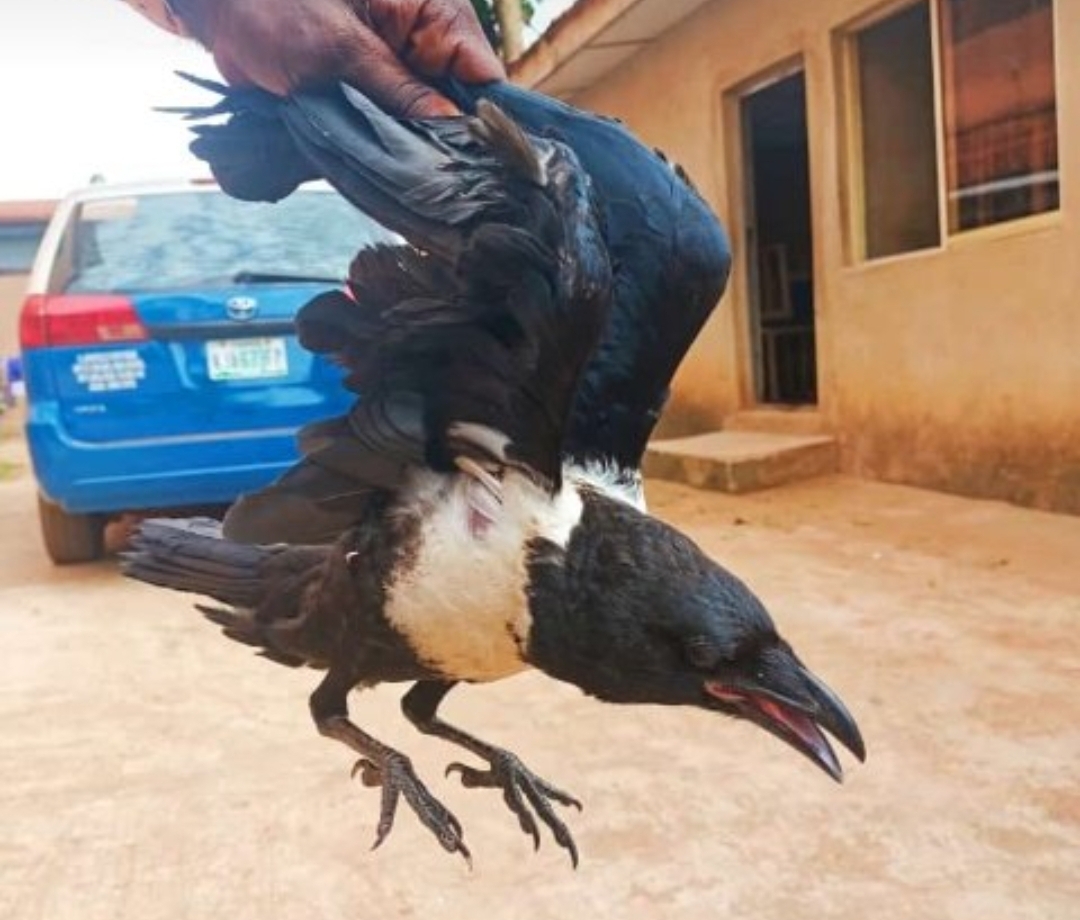
Researchers have found that crows possess an extraordinary ability to recognize individual human faces and pass information about potential threats to their offspring and other members of their community.
Studies involving American crows showed that the birds can remember people associated with negative experiences for many years. In some cases, researchers observed that crows retained memories of specific individuals for up to 17 years, highlighting the species’ remarkable intelligence and long-term memory.
To examine this behavior, scientists conducted experiments in which they wore distinctive masks while trapping and banding a small number of crows. Although the procedure did not harm the birds, it was perceived as stressful, leading the crows to associate the masked individuals with danger.
The birds responded by issuing alarm calls, scolding, mobbing, and even dive-bombing anyone wearing the same mask. Over time, these reactions became a consistent response whenever the “threatening” face appeared.
Researchers also discovered that this knowledge was not limited to the crows directly involved in the encounters. Young birds born after the original events, as well as other crows in the area, learned to identify the perceived threat by observing the behavior and warning calls of experienced adults.
The findings demonstrate how crows use social learning to share information within their communities. What begins as an individual negative experience can spread through an entire local population, allowing future generations to recognize and avoid potential dangers without encountering them firsthand.