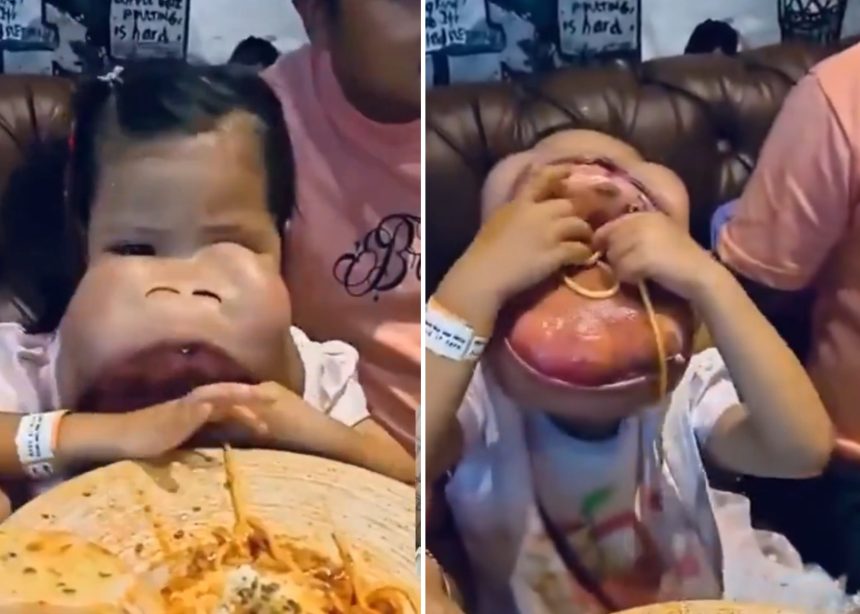
A video showing a young child with an unusual facial appearance has generated emotional reactions on X, with several users expressing concern about her wellbeing and urging those responsible for her care to seek professional medical attention.
The video, which circulated on X, show the child seated in a restaurant setting. Her appearance quickly caught the attention of social media users, causing a wave of comments from netizens who said they were worried about her health.
As the video spread online, many users responded with comments of sympathy and prayers for the child. Some expressed hope that she would receive the appropriate treatment and recover in full.
Other commenters took a more urgent approach, encouraging the child’s family to take her to a hospital for a proper medical assessment. Their comments reflected concerns that the visible changes in the child’s face could require professional attention rather than being addressed through speculation on social media.
Some users went further by suggesting that the child could have a tumour, such claims lacks facts and there is no information accompanying the circulating video that establishes that the child has a tumour or any particular medical condition. Medical conditions cannot reliably be diagnosed from a photograph or short social media video alone, an examination by a qualified healthcare professional would be necessary before any diagnosis could be made.
The uncertainty surrounding the child’s condition has not stopped social media users from expressing their concern. Many commenters appeared particularly emotional after seeing the video and focused on wishing the child well rather than attempting to determine the cause of her appearance.
Several users also advised the child’s family to seek medical assistance as soon as possible. Their comments highlighted the importance of allowing trained healthcare professionals to assess unusual physical symptoms, particularly when they involve a child.
Where a child experiences significant or sudden facial swelling, difficulty breathing, difficulty swallowing, severe pain, unusual weakness or other rapidly developing symptoms, professional medical assessment can be important. The appropriate response depends on the child’s actual symptoms and medical history, which cannot be established from the circulating footage.
The reaction to the video also illustrates the challenges that can arise when potentially sensitive health-related images are shared online. Social media platforms allow photographs and videos to reach large audiences within a short period, but the information surrounding such content may be incomplete.
In situations involving children, this can make responsible discussion particularly important. Well-meaning users may want to offer advice or identify a possible condition, but speculation can potentially cause unnecessary fear for the family and may spread misinformation to thousands of people.
Rather than relying on online guesses, medical concerns should be evaluated by qualified healthcare professionals. A proper assessment may involve examining the child, reviewing relevant medical history and, where necessary, conducting appropriate tests before determining the cause of any visible symptoms.
The online discussion has nevertheless remained largely sympathetic, with many users expressing hope that the child receives the care she needs. Some commenters also used the opportunity to encourage greater awareness about the importance of paying attention to unusual changes in a child’s health.
The identity of the child, her medical history and the circumstances surrounding the video were not established in the material provided. It is therefore not possible to confirm from the circulating footage whether she is currently receiving treatment or whether she has been diagnosed with any medical condition.
For now, the strongest message emerging from the reactions on X is a call for compassion and appropriate medical attention. While prayers, encouragement and public concern may offer emotional support, they cannot replace professional medical assessment.
As the video continues to attract attention, social media users have been encouraged to avoid presenting unverified diagnoses as facts. Claims that the child has a tumour or another specific illness should not be treated as confirmed unless they are supported by credible information from her family or qualified medical professionals.
The concern generated by the video ultimately reflects the public’s emotional response to seeing a child who appears to need attention. Many users have expressed their hope that she receives appropriate care and makes a full recovery.
For the child’s privacy and wellbeing, any further discussion about her health should ideally focus on verified information rather than speculation. If she has an underlying medical condition, qualified healthcare professionals are best placed to determine the cause and recommend the appropriate treatment.