The Ikwerre and Etche people are among the indigenous communities whose histories and cultural traditions contribute to the rich heritage of Rivers State and Niger Delta region.
Their identities have been shaped over generations by family structures, indigenous languages, agriculture, traditional institutions, oral history, ceremonies and relationships with neighbouring communities. While modernisation has changed some aspects of everyday life, both communities continue to preserve important elements of their heritage.
Studying the Ikwerre and Etche provides an opportunity to better understand the cultural diversity of Rivers State and the different historical experiences that have contributed to the development of southern Nigeria.
The Ikwerre People and Their Historical Background
The Ikwerre, also known in some sources as Ikwere or Iwhuruohna, are an indigenous people predominantly associated with Rivers State. Ikwerre communities are found across parts of the state’s upland areas, including areas around Port Harcourt, Obio-Akpor, Ikwerre and Emohua.
The history of the Ikwerre has been discussed through oral traditions, linguistic studies, historical research and accounts of settlement and migration. Different interpretations exist concerning the group’s origins and historical relationships with neighbouring populations.
Some Ikwerre oral traditions associate their ancestry with the ancient Benin Kingdom, while other historical interpretations have examined connections with surrounding communities through language, migration patterns and settlement histories. Because many early African histories were preserved orally before extensive written records became available, accounts of origins can vary.
This makes it important to distinguish between community traditions and conclusions established through academic research. Rather than presenting every traditional account as an undisputed historical fact, researchers can examine oral histories alongside linguistic, archaeological and documentary evidence.
Language and Cultural Identity of the Ikwerre
Language remains an important part of Ikwerre cultural identity. The Ikwerre language is spoken across the community and has different varieties associated with particular areas.
Linguistic classifications generally place Ikwerre within the wider Niger-Congo language family and the Igboid group. However, linguistic classification and ethnic identity are not necessarily identical, and Ikwerre people maintain a distinct cultural identity.
The preservation of the language has become increasingly important as younger generations interact more frequently with English and Nigerian Pidgin in schools, workplaces, cities and online spaces.
Indigenous language preservation can involve teaching children the language at home, documenting vocabulary and oral traditions, producing educational materials and encouraging cultural organisations to promote its continued use.
Traditional Ikwerre Society and Family Life
Traditional Ikwerre society placed considerable importance on extended families, village communities, elders and traditional institutions.
Family relationships helped determine social responsibilities, inheritance arrangements and participation in community affairs. Elders also served as important custodians of history, customs and traditional knowledge.
Traditional institutions performed functions that included community organisation and dispute resolution before modern administrative and judicial systems became dominant.
Christianity, formal education, urbanisation and modern government have significantly changed social life over time. Nevertheless, family relationships, community leadership and traditional institutions continue to form important parts of Ikwerre cultural life.
Marriage is another area where traditional customs remain visible. Ikwerre traditional marriage ceremonies can involve families from both sides, negotiations, customary requirements and the presentation of traditional items.
The precise procedures can differ between communities and families. In many cases, traditional marriage practices now exist alongside church weddings and civil marriage, creating ceremonies that combine indigenous customs with modern practices.
Festivals, Music and Oral Heritage
Festivals and cultural gatherings provide opportunities for communities to preserve and celebrate their heritage.
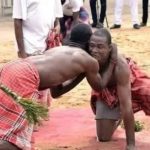
Traditional music, dancing, clothing, ceremonies and communal gatherings can bring together residents, people living in cities and members of the diaspora. These occasions also provide younger people with opportunities to learn about customs that may not be part of their everyday lives.
Music and storytelling have historically been particularly significant in societies where knowledge was passed from one generation to another through oral traditions.
Songs, stories and ceremonial performances can preserve memories about families, communities and historical events while also teaching social values.
The Etche People of Rivers State
The Etche are another indigenous population associated with Rivers State. Etche communities are particularly concentrated in Etche and Omuma local government areas.
The region has historically supported agricultural activity and rural settlements, with communities developing close relationships with the surrounding land and environment.
Like other indigenous groups in the Niger Delta, the Etche have preserved aspects of their history through oral traditions, family narratives and community knowledge. These traditions have helped explain settlement histories, relationships with neighbouring communities and connections to ancestral lands.
Written and academic research provides another source for studying Etche history, although oral accounts remain important for understanding how members of the community themselves have interpreted and preserved their past.
Oral Traditions and Beliefs Among the Etche
Traditional stories and myths have played an important role in the cultural life of the Etche people.
Such narratives historically provided explanations about nature, human existence, community relationships and the unseen world. They could also communicate expectations about behaviour and reinforce shared values.
Research into Etche traditions has examined how myths and oral accounts helped communities understand their environment and their place within it.
The spread of Christianity and other social changes has transformed religious practices across the region. However, traditional stories and historical knowledge can continue to have cultural significance even when religious beliefs and everyday practices change.
Agriculture and the Etche Way of Life
Agriculture has historically been central to life in many Etche communities. The area’s environment has supported the cultivation of food crops and other agricultural products, making farming an important source of household food, income and local trade.
Traditional agricultural knowledge could be passed between generations, including information about crops, farming seasons, land use and cultivation practices.
Agriculture also demonstrates the close relationship between culture and the environment. However, urbanisation, population growth, changing land use and modern economic activities have transformed rural communities across Rivers State.
Today, Etche people participate in many professions beyond agriculture, including education, business, government, technology and other modern sectors.
Food, Clothing and Other Expressions of Culture
Food remains an important expression of cultural identity among communities in Rivers State, including the Ikwerre and Etche.
Traditional meals have historically been influenced by locally available crops and ingredients. Staples such as cassava, yam and plantain form part of the broader food traditions of southern Nigeria, although individual dishes and preparation methods can vary between communities and families.
Clothing also plays a significant role during traditional marriages, festivals, chieftaincy ceremonies and other cultural occasions.
Although modern clothing dominates everyday life, traditional attire continues to be used to express identity during important celebrations.
Food and clothing therefore serve purposes beyond everyday use. They can connect people to their families, communities and cultural history.
Similarities Between the Ikwerre and Etche
The Ikwerre and Etche have distinct identities, but their histories also contain several similarities. Both communities have traditionally placed importance on family relationships, community organisation, agriculture, oral traditions, indigenous languages and cultural celebrations.
Both have also experienced major changes resulting from Christianity, formal education, urbanisation, modern government and economic development.
Their location within Rivers State has also resulted in interactions with neighbouring populations and growing urban centres, particularly as Port Harcourt and surrounding areas have expanded.
These similarities demonstrate how communities within the same geographical region can influence one another while retaining their own identities.
Important Differences Between the Two Communities
Despite their geographical proximity and cultural similarities, the Ikwerre and Etche should not simply be treated as one group. Each community has its own historical narratives, cultural practices, languages or language varieties, social structures and traditions.
Individual communities within both groups may also have practices that differ from those found elsewhere. Cultural identity is therefore not always uniform across every village or family.
Recognising these differences is important when discussing the history of Rivers State. It allows the diversity of indigenous communities to be represented without unnecessarily combining distinct identities.
How Modernisation Is Affecting Their Heritage
Modernisation is changing cultural practices among both the Ikwerre and Etche. Many younger people now live in urban areas for education, employment and business opportunities. English and Nigerian Pidgin are widely used in many formal and informal settings, potentially reducing the everyday use of indigenous languages among some younger speakers.
Traditional occupations have also evolved. Farming remains important in many communities, but people increasingly work in professional, commercial, educational, governmental and technological fields.
Social media presents both a challenge and an opportunity. Digital platforms can contribute to the decline of traditional practices when younger generations become disconnected from them. At the same time, the same platforms can be used to record cultural events, teach indigenous languages, share traditional recipes and document oral histories.
Why Cultural Preservation Matters
Preserving Ikwerre and Etche heritage is important because cultural traditions provide communities with links to previous generations.
Languages, songs, stories, ceremonies, food, clothing, family histories and traditional institutions can provide valuable information about how communities developed and how earlier generations understood their world.
Cultural preservation does not mean rejecting modernisation. Instead, communities can combine modern education and technology with deliberate efforts to document and teach traditional knowledge.
Families can introduce children to indigenous languages and traditions, while schools, historians, researchers and cultural organisations can help document community histories.
Digital archives also provide new possibilities for preserving oral histories and cultural materials that might otherwise disappear.
The Future of Ikwerre and Etche Heritage
The future of Ikwerre and Etche cultural heritage will depend significantly on how successfully knowledge is transferred between generations. Technology can play an increasingly important role. Oral interviews with elders can be recorded, traditional songs can be archived, historical photographs can be preserved and cultural events can be documented digitally.
Academic research can also help distinguish established historical evidence from oral traditions and later interpretations. This is particularly important when discussing questions of ancestry, migration and relationships between neighbouring ethnic groups.
Young people can contribute to cultural preservation by learning indigenous languages, documenting family histories and participating in community cultural activities.
Conclusion
The Ikwerre and Etche people form an important part of the cultural landscape of Rivers State and the wider Niger Delta. Their heritage reflects generations of community life shaped by language, agriculture, family relationships, oral traditions, traditional institutions, music, food and cultural ceremonies.
Although modernisation has changed many traditional practices, cultural identity continues to evolve rather than simply disappear. The challenge is to ensure that valuable historical knowledge and traditions are documented and passed on while communities continue to participate fully in modern Nigerian society.
The histories of the Ikwerre and Etche also demonstrate the wider diversity of Nigeria. Understanding and documenting the experiences of individual communities can provide a more complete picture of the people, traditions and historical developments that have shaped Rivers State and the Niger Delta.