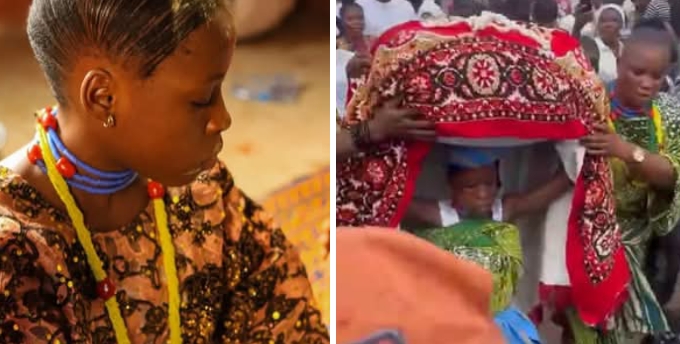
The participation of 10-year-old Princess Alimot Osunbunmi in the Osun-Osogbo Festival has sparked an online debate over the balance between cultural preservation and rights of children.
Concerns has been raised over what is described as a lifelong cultural responsibility placed on the young princess during the festival. Those questioning the development argue that a child of 10 may not yet have the maturity to fully understand or independently consent to an obligation that could influence important aspects of her future.
The discussion has gained attention because of the significance attached to the role in which the development has reportedly been presented as a historic moment. Critics argue that celebrating the occasion should not overshadow questions about the child’s welfare, education, personal development and eventual rights to make her own decisions.
For many Nigerians, cultural traditions remain an important part of identity and community life. Traditional festivals provide opportunities for younger generations to learn about their heritage, participate in ceremonies and maintain connections with customs that have been passed down over generations.
However, child-rights concerns become more significant when cultural participation involves responsibilities that could extend into adulthood. Critics of the situation argue that there is an important distinction between allowing a child to participate in cultural activities and assigning the child an obligation that could potentially shape the course of her life.
The Osun-Osogbo Festival occupies an important place in Yoruba cultural heritage. Held in Osogbo, Osun State, the annual celebration is associated with the Osun River and traditional religious and cultural practices. It attracts devotees, cultural practitioners, tourists and visitors from different parts of Nigeria and beyond.
The festival’s cultural importance has also received international recognition, with the Osun-Osogbo Sacred Grove designated a UNESCO World Heritage Site. Its preservation has therefore remained an important issue for cultural institutions and communities committed to protecting Yoruba heritage.
Against that background, the controversy involving Princess Alimot Osunbunmi has raised a wider question about how traditional institutions can preserve cultural practices while also responding to modern understandings of children’s rights.
Those expressing concern are not necessarily opposed to children learning about or participating in traditional customs. Instead, they argue that cultural education and participation should take place in ways that protect a child’s dignity, safety, education and ability to make significant personal decisions later in life.
They also question whether a 10-year-old can meaningfully understand the long-term consequences of accepting a responsibility described as lifelong. From this perspective, the central issue is not the value of the tradition itself but whether the child has sufficient maturity and autonomy to make such a consequential choice.
Supporters of traditional practices could view the involvement of a young person as an important mechanism for ensuring continuity. Passing cultural knowledge and responsibilities from one generation to another is, after all, a common feature of traditional societies.
Critics, however, maintain that cultural continuity should not automatically require children to assume permanent responsibilities before they reach an age at which they can properly evaluate the implications. They argue that traditions can be preserved while allowing children greater space to grow and eventually determine their own paths.
Questions have consequently been raised about the precise nature of the responsibility given to the young princess, how long it is expected to remain in effect and what safeguards may exist to protect her welfare. These details are important in determining the extent to which the arrangement could affect her education, personal development and future choices.
The debate also highlights the broader challenge facing traditional institutions in contemporary Nigeria: how to protect valuable cultural heritage while ensuring that established practices remain consistent with principles of human dignity and child welfare.
For advocates concerned about the princess’s welfare, the priority should be allowing her to grow, receive an education and develop the maturity required to make major decisions about her life. They argue that participation in cultural traditions should enrich a child’s development rather than restrict the choices available to them later.
The controversy surrounding Princess Alimot Osunbunmi is therefore part of a much larger conversation about culture, tradition and children’s rights. It raises questions that extend beyond the Osun-Osogbo Festival and touch on how communities can preserve their identity while adapting practices to contemporary expectations concerning the protection of children.
As the discussion continues, the key issue remains whether cultural responsibilities assigned to children can be maintained in a manner that protects their welfare and preserves their ability to make informed choices when they reach an appropriate age.
For those calling for greater scrutiny, protecting children does not mean abandoning culture. Rather, they argue that cultural traditions can remain meaningful and continue from one generation to another while ensuring that the dignity, welfare and future autonomy of children are not compromised.