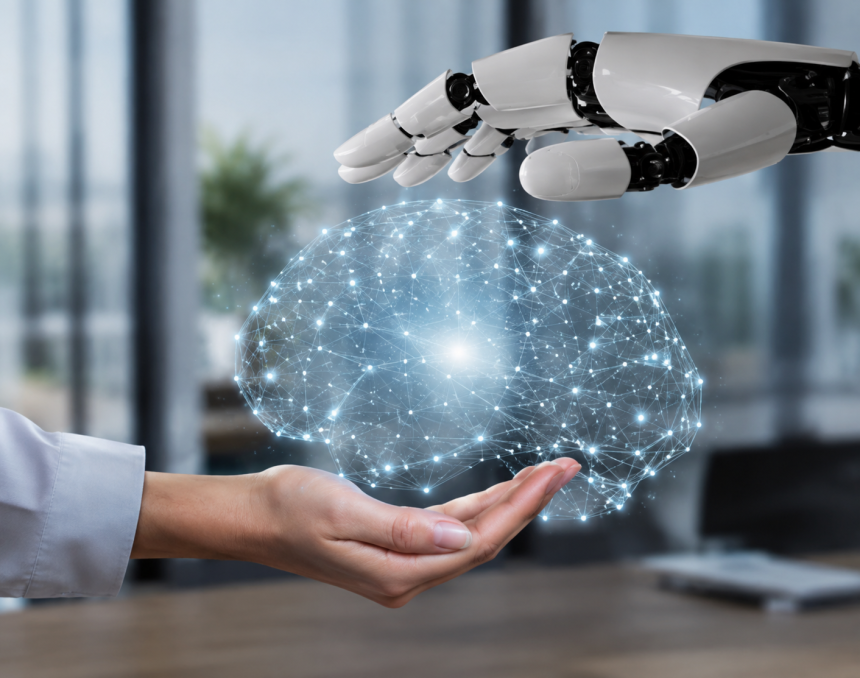
Science and innovation are constantly changing the way people live, communicate and solve everyday problems. Technologies that once appeared limited to laboratories or science-fiction stories are increasingly finding practical applications in homes, businesses, hospitals, farms and other industries.
From artificial intelligence and advanced robotics to renewable energy, biotechnology and quantum computing, researchers around the world are developing technologies that could have a lasting influence on modern society. While some are already being used commercially, others remain in the research and development stage.
The impact of these technologies will not necessarily be the same everywhere. Adoption can depend on factors such as cost, infrastructure, regulation, availability of skilled workers and public acceptance. Nevertheless, continued investment in scientific research could make several emerging technologies increasingly relevant to everyday life.
1. Artificial Intelligence
Artificial intelligence is among the most rapidly developing areas of modern technology. AI systems are designed to process information, recognize patterns and perform tasks that can require substantial human effort.
AI is already being applied across industries, including healthcare, education, finance, transportation, customer service and scientific research. Generative AI has expanded public interest in the technology by enabling computer systems to produce text, images, audio, software code and other forms of content based on user instructions.
As research continues, developers are working to improve the accuracy, efficiency and reliability of AI systems. Future applications could provide people with more sophisticated digital assistants, help organizations analyze complex information and support professionals working in fields that require large-scale data processing.
The expansion of AI also creates important questions involving privacy, cybersecurity, employment, misinformation and responsible use. Its long-term influence will therefore depend not only on technical progress but also on how governments, businesses and society establish appropriate safeguards.
2. Advanced Robotics
Robotics is another field that could significantly change the relationship between people and machines. Modern robots can perform highly repetitive, precise or physically demanding tasks, making them particularly valuable in industrial environments.
Manufacturers already use robots for activities such as assembly, welding, packaging and material handling. Their ability to operate consistently can improve productivity and allow workers to spend more time on tasks that require human judgment and creativity.
Researchers are also exploring robotic applications beyond factories. Robots could assist with healthcare, agriculture, logistics, disaster response and certain household activities. In healthcare, for example, robotic systems can support medical procedures and other specialized tasks, while agricultural robots may help monitor or manage crops.
More advanced robots may eventually become capable of navigating complex environments and interacting more naturally with humans. However, widespread adoption will depend on factors including affordability, safety, reliability and the ability of robots to perform useful tasks outside controlled environments.
3. Renewable Energy and Advanced Energy Storage
The need for reliable and more sustainable energy has accelerated innovation in renewable power and energy-storage technologies. Solar and wind power have become important components of energy systems in many parts of the world, while researchers continue to investigate ways to improve efficiency and reliability.
One major challenge with some renewable energy sources is that electricity generation can vary according to conditions such as sunlight and wind. This makes energy storage an important part of efforts to build more flexible electricity systems.
Advances in batteries and other storage technologies could allow excess electricity to be stored and used when renewable generation is lower or demand increases. Improved storage could also support electric transportation, homes using solar power and electricity systems serving areas with limited infrastructure.
Continued innovation in renewable energy could therefore influence everything from household electricity costs to transportation and industrial production. The speed of change, however, will depend on technology costs, infrastructure investment, government policies and the availability of necessary materials.
4. Biotechnology and Gene Research
Biotechnology is combining advances in biology with modern technology to improve scientific research, agriculture and healthcare. Scientists are studying cells, genes and biological processes to better understand how living systems work and how certain diseases develop.
Gene-editing technologies have received significant attention because they can allow researchers to make targeted changes to genetic material. Scientists are investigating possible applications in medicine, agriculture and biological research.
The field has considerable potential, but it also requires careful scientific evaluation and regulation. Genetic technologies can involve complex ethical, safety and medical considerations, meaning promising research does not automatically translate into an approved treatment or commercial product.
Continued advances in biotechnology could nevertheless contribute to new medical approaches, improved agricultural crops and a deeper understanding of human biology. Researchers must balance innovation with rigorous testing and responsible oversight as these technologies develop.
5. Quantum Computing
Quantum computing represents a fundamentally different approach to information processing. Unlike conventional computers, which use bits represented as 0 or 1, quantum computers use quantum bits, or qubits, that operate according to principles of quantum physics.
Researchers are investigating whether quantum computers could eventually help solve certain problems that are extremely difficult for conventional computing systems. Potential areas of interest include chemistry, materials science, optimization and cryptography.
Despite its potential, quantum computing remains a developing field. Building reliable quantum systems and maintaining the delicate conditions required for their operation are significant scientific and engineering challenges.
For that reason, quantum computing is unlikely to replace conventional computers in everyday devices in the immediate future. Instead, its importance may emerge through specialized applications where quantum systems can provide advantages for particular types of complex problems.
6. Smart Agriculture
Technology is also changing how farmers produce and manage food. Smart agriculture uses tools such as sensors, satellite imagery, drones, automated machinery and data-analysis systems to help farmers make more informed decisions.
For example, sensors can collect information about soil moisture and other field conditions. Farmers can use such information to determine where and when crops may require water or other resources.
Drones and satellite systems can provide aerial views of farmland, making it possible to monitor large areas and identify potential problems. Data-driven agricultural tools can also help farmers understand crop conditions and manage resources more efficiently.
As demand for food increases and farmers face challenges involving climate, water availability and production costs, agricultural technology could become increasingly important. Wider adoption will depend on access to reliable infrastructure, affordable equipment, technical knowledge and suitable digital services.
7. Medical Technology and Wearable Devices
Healthcare is another sector where technological innovation is creating new tools for patients and medical professionals. Wearable devices, including smartwatches and fitness trackers, can collect information about activities and certain physiological measurements.
More specialized medical devices can monitor specific health-related indicators and provide information that may assist healthcare professionals. Researchers are also exploring the use of artificial intelligence, advanced medical imaging, robotics and remote-monitoring systems in different healthcare settings.
These technologies can provide additional information and support, but they are not a substitute for qualified medical professionals. Data collected by consumer devices may also have limitations, meaning users should avoid treating every measurement as a medical diagnosis.
As healthcare technology becomes more sophisticated, the combination of digital tools and professional medical expertise could make monitoring and managing certain health conditions more efficient.
The Importance of Responsible Innovation
Technological progress can provide significant benefits, but it can also introduce new risks. Issues involving privacy, cybersecurity, employment, environmental impact, safety and unequal access need to be considered as emerging technologies become more widespread.
Artificial intelligence, biotechnology and other advanced fields demonstrate why scientific progress needs to be accompanied by responsible development. New systems and products generally require appropriate research, testing, regulation and monitoring before they can be safely adopted on a large scale.
Governments, researchers, technology companies and the public all have important roles in shaping how emerging technologies are developed and used. Responsible innovation can help ensure that technological
The technologies being developed today could influence everyday life in ways that are difficult to predict precisely. Some innovations may become widely adopted, while others may remain specialized or fail to achieve commercial success.
Artificial intelligence could become more deeply integrated into digital services, robots could perform a wider range of physical tasks, renewable energy systems could become more efficient, and advances in biotechnology could provide researchers with new ways to study and treat diseases.
At the same time, technologies such as quantum computing may take years of additional research before their most significant applications become practical. The pace of development will depend on scientific discoveries, investment, regulation and the ability to overcome technical challenges.
Ultimately, science and innovation are not simply about creating new machines or software. Their greatest value comes from applying knowledge to real-world problems. When developed responsibly, emerging technologies have the potential to improve productivity, support scientific discovery, strengthen essential services and create new opportunities for communities around the world.