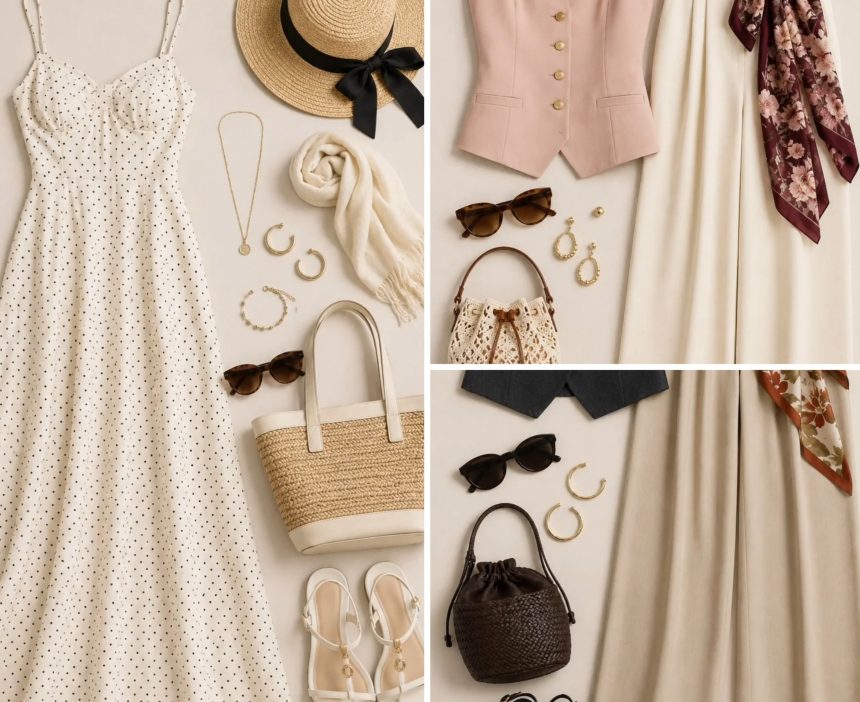
Women’s fashion continues to change with new designs, colours and trends emerging every year. However, looking stylish does not necessarily require expensive designer clothing or a wardrobe filled with the latest trends. A strong personal style often begins with understanding what fits well, choosing practical pieces and learning how to create balanced outfits.
For many women, clothing is part of everyday self-expression. What someone wears to the workplace may differ significantly from what she chooses for a wedding, social gathering, date or relaxed weekend outing. Dressing appropriately for each setting can help create a polished appearance while allowing personal preferences to remain visible.
Improving a wardrobe also does not mean throwing away everything and starting again. In many cases, small changes can make existing clothes more useful. Better combinations, appropriate accessories, proper garment care and a few carefully selected additions can provide more outfit options without unnecessary spending.
For women looking to refine their style in 2026, the following practical fashion principles can provide a useful starting point.
1. Make the Right Fit a Priority
Fit is one of the most important factors to consider when choosing clothing. Even a high-priced outfit can appear less polished when it does not sit properly on the body.
When shopping, consider areas such as the shoulders, bust, waist, hips, sleeves and overall garment length. Clothing should allow comfortable movement while maintaining an appropriate shape and proportion.
Different garments are intentionally designed with different silhouettes, so there is no single fit that works for everyone. The most useful approach is to understand which cuts and proportions complement your individual preferences and provide the comfort you need.
For pieces that are almost perfect but require minor adjustments, professional tailoring can sometimes make a noticeable difference. Altering a hem, sleeve or waist can improve both comfort and appearance.
2. Invest in Versatile Wardrobe Essentials
A useful wardrobe does not necessarily have to be large. Having dependable pieces that can be combined in several ways can make everyday dressing considerably easier.
Basic items can include well-fitting jeans, trousers, skirts, dresses, plain tops, blouses, cardigans, jackets and comfortable footwear. These pieces can serve as a foundation for outfits suitable for different occasions.
Neutral shades such as black, white, navy, beige, brown and grey are particularly versatile because they can be combined with a wide range of colours and patterns.
Once these essentials are established, women can introduce statement garments or seasonal pieces to give their wardrobe more personality without relying entirely on trends.
3. Learn the Basics of Colour Coordination
Colour plays an important role in how an outfit comes together. Fortunately, creating attractive colour combinations does not require an advanced knowledge of fashion.
Women who are unsure about combining colours can begin with neutral shades. A white top and blue jeans, for example, create a simple combination that can be adapted with different footwear and accessories.
Beige trousers can also work well with darker shades such as navy, while brighter colours can be introduced through handbags, shoes, tops or jewellery.
The objective is not necessarily to avoid bold colours but to create combinations that feel balanced and intentional.
4. Choose Footwear With Both Style and Comfort in Mind
The right shoes can complement an outfit, while unsuitable or poorly maintained footwear can affect an otherwise polished appearance.
Casual sneakers can work with jeans and other relaxed outfits, while flats, loafers, sandals, boots or heels may be better suited to different occasions.
Comfort is particularly important when footwear will be worn for long periods. A stylish pair of shoes that causes significant discomfort may not be practical for everyday activities.
Keeping footwear clean and properly maintained can also extend its useful life and help it continue to complement different outfits.
5. Dress for the Occasion
Personal style also involves understanding when certain types of clothing are appropriate. The outfit suitable for a casual day at the beach may be completely different from what is expected at a formal dinner, wedding or professional meeting.
Before choosing an outfit, consider the venue, purpose of the event, expected dress code, weather and time of day.
This does not mean that women have to sacrifice their individuality. Instead, understanding the setting provides a framework for choosing clothing that is both appropriate and reflective of personal style.
Knowing how to move between casual, smart-casual, professional and formal dressing can make it easier to prepare for different situations.
6. Take Proper Care of Your Clothes
Building a stylish wardrobe is only part of maintaining a good appearance. How clothing is washed, stored and maintained can also affect its condition.
Women should pay attention to care labels, especially when dealing with delicate fabrics or garments that require special washing instructions. Using the appropriate cleaning and drying methods can help reduce unnecessary wear.
Storage also matters. Depending on the garment, folding or hanging it properly can help maintain its shape. Stains should be addressed promptly, while loose buttons, threads and other minor problems should be repaired before they become more serious.
Proper garment care can extend the useful life of clothing and reduce the need to replace pieces unnecessarily.
7. Avoid Making Every Fashion Trend a Priority
Fashion trends can be useful sources of inspiration, but they are not necessarily suitable for everyone. Styles can also change quickly, making it expensive and impractical to replace a wardrobe whenever a new trend becomes popular.
A more sustainable approach is to maintain a foundation of versatile and timeless pieces while selectively introducing trends that genuinely suit your preferences.
This allows women to experiment without allowing temporary styles to completely determine their wardrobe.
Personal fashion should ultimately reflect the individual. A woman does not need to wear something simply because it is popular if it does not feel comfortable or appropriate for her.
8. Use Accessories Thoughtfully
Accessories can transform a relatively simple outfit and provide an opportunity to express personality.
Depending on the occasion, women can use handbags, watches, scarves, belts, sunglasses, earrings, necklaces and other jewellery to add detail to an outfit.
However, accessories should generally complement the clothing rather than compete with it. Wearing several bold pieces at once can sometimes make an outfit appear unnecessarily busy.
For everyday dressing, one or two carefully selected accessories may be enough. On special occasions, statement pieces can be used to create a stronger visual effect.
9. Shop According to Your Lifestyle
A wardrobe should reflect the life a woman actually lives. Buying attractive clothes that are rarely suitable for everyday activities can result in a wardrobe full of items that remain unused.
Someone working in an office may require more professional clothing, while someone with an active lifestyle may benefit more from comfortable casual pieces and practical footwear.
The local climate should also influence clothing decisions. In warmer conditions, breathable and lightweight garments may provide greater comfort, while layering can be useful when temperatures fluctuate.
Considering lifestyle, climate, budget and daily activities before making purchases can help women build wardrobes that are both fashionable and practical.
10. Develop a Personal Style
Perhaps the most important fashion lesson is to discover what works for you rather than attempting to copy someone else’s entire appearance.
Women can find inspiration from designers, celebrities, magazines, social media creators, friends and people they encounter in everyday life. However, inspiration does not have to mean imitation.
Experimenting with different colours, fabrics, silhouettes, shoes and accessories can help identify personal preferences. Over time, this experience can make outfit selection faster and more intuitive.
A strong personal style is often built gradually. It develops as people learn which clothing makes them feel comfortable, confident and appropriately dressed for their surroundings.
Why a Versatile Wardrobe Can Make Fashion Easier
A versatile wardrobe can provide more outfit possibilities without requiring a large number of clothes. Pieces that can be combined across different settings can make daily dressing more convenient and potentially reduce unnecessary purchases.
For example, a simple blouse could be worn with jeans for a casual outing, trousers for work or a skirt for a more polished appearance. Changing shoes and accessories can further alter the overall look.
This approach also encourages more thoughtful shopping. Rather than buying clothing simply because it looks attractive in a shop or online, women can consider whether the item will work with pieces they already own.
Fashion Is About More Than Following Trends
Social media has made fashion inspiration more accessible than ever, but it has also created pressure to constantly update personal style. Women should remember that fashionable dressing does not require adopting every new trend.
Comfort, practicality, quality, fit and personal preference can be just as important as what happens to be popular at a particular moment.
A wardrobe that reflects an individual’s lifestyle can remain useful even as trends change. This can make fashion more manageable and allow women to develop a distinctive appearance instead of constantly starting over.
Final Thoughts
Women’s fashion does not have to be complicated or expensive. A polished appearance can be achieved by focusing on fundamentals such as proper fit, versatile clothing, colour coordination, suitable footwear and thoughtful accessories.
Taking care of existing garments can also help preserve their appearance and extend their lifespan, while selective shopping can prevent wardrobes from becoming unnecessarily crowded.
Ultimately, personal style should provide a balance between appearance, comfort and individuality. By understanding what works for their lifestyle and gradually building a wardrobe around those needs, women can create outfits that help them feel confident and prepared for different occasions throughout 2026.