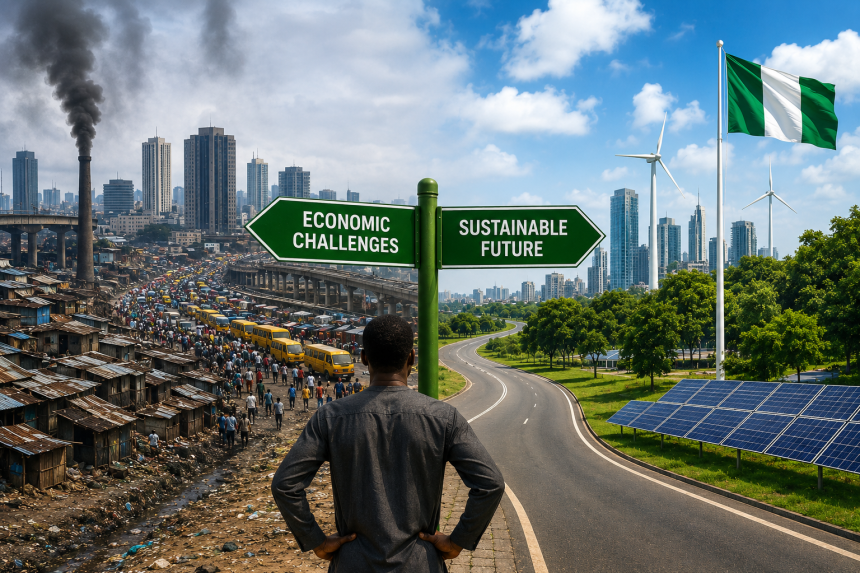
Nigeria’s economic challenges have placed increasing pressure on households, businesses and communities, making sustainability an issue that extends beyond environmental protection. As the cost of essential goods and services continues to influence household decisions, the way Nigerians consume food, energy, water and other resources is becoming increasingly important.
The National Bureau of Statistics (NBS) currently reports headline inflation at 15.91 percent and food inflation at 17.52 percent under the rebased Consumer Price Index. Rising costs have made efficient use of household resources more important, particularly for families attempting to maintain their standard of living while managing limited incomes.
Sustainability should not be viewed simply as a strategy for saving money. At its core, sustainability is about meeting present needs without undermining the ability of future generations to meet their own needs. In Nigeria, this means finding a balance between economic development, social wellbeing and responsible management of natural resources.
Economic Hardship Is Changing Consumption Habits
Economic pressure can influence the way people buy, use and dispose of products. Families may become more careful about food purchases, electricity consumption, transportation and household items because unnecessary spending is increasingly difficult to absorb.
This shift can also create an opportunity to develop more sustainable habits. Buying only what is needed, repairing items instead of immediately replacing them, reducing food waste and using energy efficiently can lower unnecessary consumption while reducing pressure on natural resources.
Food waste is one area where the economic and environmental sides of sustainability closely intersect. BudgIT has estimated that Nigeria loses or wastes between 30 million and 40 million metric tonnes of food annually. Such losses represent more than wasted meals; they also represent wasted money, agricultural inputs, water, energy, labour and transportation resources.
Households can contribute to reducing food waste by planning meals, checking existing supplies before shopping, storing food appropriately and preparing portions that are more likely to be consumed. Using older food before opening newly purchased items can also help prevent avoidable waste. While individual household actions cannot solve Nigeria’s wider food-loss problem alone, they can contribute to more responsible consumption.
Energy Efficiency And Renewable Energy
Energy is another major part of Nigeria’s sustainability challenge. Households and businesses rely on electricity and, in many cases, petrol or diesel generators to meet their energy needs. Unnecessary consumption can increase household expenses while also contributing to greater fuel use and environmental pollution.
Simple energy-saving practices can therefore have both financial and environmental benefits. Turning off lights and appliances when they are not being used, making better use of natural daylight and choosing energy-efficient lighting and appliances where affordable are examples of practical measures.
Renewable energy, particularly solar power also has an important role to play in Nigeria’s long-term sustainability. Solar systems can provide an alternative source of electricity for households and businesses and can reduce dependence on fuel-powered generators for certain applications.
Renewable energy should be approached realistically. Solar installations can require significant upfront investment, meaning households should consider their actual electricity requirements and financial capacity before making a purchase. A smaller system designed to power essential devices may be more practical for some households than attempting to replace every existing source of electricity at once.
Repair, Reuse and Responsible Consumption
The principle of sustainability also challenges the idea that damaged or unwanted products should automatically be replaced or discarded. Repairing furniture, clothing and suitable household items can extend their useful lives and reduce the volume of materials entering waste streams.
Reuse can provide another practical solution. Containers, durable shopping bags and some packaging materials can potentially be used again where doing so is safe and appropriate. Instead of automatically throwing an item away, consumers can consider whether it has another useful purpose.
This does not mean households should keep everything indefinitely. Sustainable consumption involves making sensible decisions about what to purchase, what to reuse, what to repair and what ultimately needs to be discarded.
Sustainable Agriculture and Food Production
Agriculture is central to Nigeria’s economy and food security, making sustainable food production particularly important. Small-scale gardening and urban agriculture can provide households with supplementary vegetables and herbs while making productive use of available land or containers.
Growing food at home will not eliminate the need for commercial agriculture or markets, but it can encourage greater awareness of how food is produced and how resources such as water and soil are used.
At a broader level, sustainable agriculture can help Nigeria address the challenges of food security, environmental degradation and changing climatic conditions. Improving agricultural productivity while protecting soil, water and other natural resources is essential if the country is to meet the food needs of a growing population over the long term.
Water Conservation and Waste Management
Water is another resource that requires responsible management. Fixing leaking taps, avoiding unnecessary water use and using appropriate amounts of water for household activities are relatively simple ways to reduce wastage.
In some circumstances, suitable water from household activities can also be reused for purposes such as cleaning outdoor areas or watering plants. However, wastewater that may contain contaminants should not be reused for drinking, food preparation or other purposes where it could create health risks.
Waste management presents an even broader challenge for Nigeria. Rapid urbanisation and population growth are increasing the amount of waste generated in many communities, placing pressure on collection, disposal and recycling systems.
Improving waste management can create environmental and economic benefits simultaneously. Recycling, repair businesses, waste collection, composting and other activities can contribute to cleaner communities while creating opportunities for employment and entrepreneurship.
Sustainability Is Also an Economic Opportunity
Sustainability should not be viewed only as a restriction on consumption or a burden on households and businesses. It can also create new economic opportunities.
Renewable energy, recycling, sustainable agriculture, waste management, repair services and environmentally responsible manufacturing can support businesses and generate employment. As demand for sustainable products and services develops, entrepreneurs may find opportunities to build businesses around solving environmental and resource-management problems.
This connection between sustainability and economic development is particularly important. A sustainable economy should not only protect natural resources but also provide opportunities for people to earn livelihoods and improve their living conditions.
Building a Sustainable Future
Nigeria’s sustainability challenge cannot be solved by households alone. Government institutions, businesses, communities, farmers, manufacturers and consumers all have roles to play.
Effective policies, reliable infrastructure, responsible business practices, better waste-management systems, investment in renewable energy and public awareness can help create an environment in which sustainable choices become easier and more affordable.
At the household level, however, sustainability can begin with everyday decisions. Reducing food waste, using energy efficiently, repairing possessions, avoiding unnecessary purchases, conserving water and reusing appropriate materials are relatively simple steps that can contribute to more responsible resource consumption.
The goal is not perfection. Many Nigerian households facing economic pressure cannot afford expensive environmental technologies or major lifestyle changes. Sustainability should therefore be approached in a way that recognises economic realities and encourages practical improvements rather than unrealistic expectations.
Nigeria’s economic challenges present serious difficulties, which clearly indicates the importance of building an economy that uses resources more efficiently and protects the foundations on which future growth depends. Sustainable development requires the country to pursue economic progress while considering environmental protection and social wellbeing.
The path toward a sustainable future will require more than individual lifestyle changes. It will depend on coordinated action from government, businesses and citizens. But every reduction in unnecessary waste, every resource used more efficiently and every sustainable business created can form part of a larger transition.
In Nigeria, sustainability is not simply an environmental ambition. It is part of the broader challenge of building a resilient economy capable of supporting present and future generations.