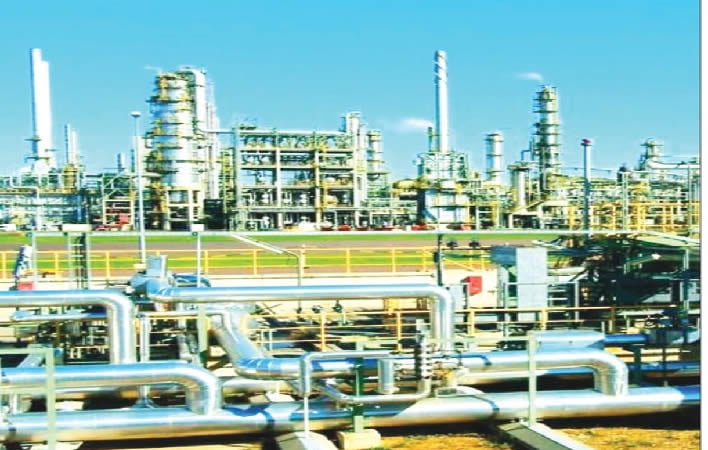
Economic experts have highlighted the growing importance of the Dangote Refinery to Nigeria’s fuel supply as international oil market volatility raises concerns about the impact of rising energy prices on consumers and businesses.
The large scale refinery owned by Nigerian industrialist Aliko Dangote has increasingly become a major part of discussions about Nigeria’s energy security. Economists say greater domestic refining capacity could reduce the country’s exposure to disruptions in the international market.
Nigeria has historically exported crude oil while importing substantial volumes of refined petroleum products needed to meet domestic demand. That arrangement has left the country vulnerable to changes in international crude prices, exchange rate pressures and disruptions affecting global petroleum supply.
Analysts say the expansion of domestic refining could alter that pattern by allowing a greater proportion of Nigeria’s crude resources to be processed locally. This could reduce the volume of refined products the country needs to source from overseas, although the extent of the impact depends on refinery output, domestic demand and market conditions.
The development has attracted particular attention amid recent increases in global crude oil prices. Geopolitical tensions and concerns over supply disruptions can quickly affect international energy markets, creating additional pressure for countries that depend heavily on imported petroleum products.
Economists quoted in the discussion argue that Nigeria’s growing refining capacity provides an additional layer of protection against some external energy-market shocks. By producing refined petroleum products domestically, the country can potentially reduce its reliance on international supplies during periods of heightened market uncertainty.
One economist described the Dangote Refinery as playing a strategic role in Nigeria’s efforts to strengthen energy security, arguing that increased local production could help shield the domestic economy from some external pressures in the oil market.
The potential economic benefits extend beyond fuel availability. Analysts say increased domestic refining could reduce demand for foreign exchange used to pay for petroleum imports. Lower import requirements could, in turn, ease some pressure on the country’s external payments position, depending on crude supply arrangements and the volume of products produced locally.
Local refining could also influence the structure of Nigeria’s petroleum market. If domestic production is able to consistently meet a larger share of demand, the country could become less dependent on international suppliers and potentially develop a stronger position in the regional refined-products market.
The refinery’s development is therefore being viewed as part of a broader shift in Nigeria’s petroleum industry. Rather than primarily exporting crude and importing finished products, the country is seeking to increase its capacity to process crude oil domestically and capture more value within the local economy.
Industry observers have also pointed to the refinery’s potential to support Nigeria’s ambition of becoming a supplier of refined petroleum products to other countries in West Africa. Regional demand for petrol, diesel, aviation fuel and other products could provide an export market if domestic production remains sufficiently high after meeting local requirements.
Eonomists note that the refinery’s contribution to economic stability should be assessed alongside other factors affecting fuel prices. International crude prices, exchange rates, transportation costs, government policies, domestic distribution networks and overall refinery output can all influence what consumers ultimately pay at filling stations.
The refinery’s impact is also linked to its ability to maintain reliable production and secure adequate crude supplies. Consistent operations and efficient distribution will be important if domestic refining is to significantly reduce Nigeria’s exposure to imported petroleum products over the long term.
For consumers and businesses, the broader significance lies in whether increased domestic refining can translate into a more reliable fuel supply and greater stability in the petroleum market. Such developments could be particularly important during periods when international energy prices rise sharply or global supply chains come under pressure.
Nigeria’s transition toward greater domestic refining capacity therefore represents a significant development in the country’s energy sector. The Dangote Refinery is at the centre of that transition, with economists and industry observers continuing to assess its effects on fuel supply, foreign exchange demand, trade and energy security.
As global oil markets remain susceptible to geopolitical developments and supply disruptions, the capacity to refine more petroleum products domestically could become increasingly important to Nigeria’s economic resilience. The longer term outcome will depend on sustained refinery operations, domestic crude availability, market conditions and how effectively refined products are distributed within Nigeria and across the region.