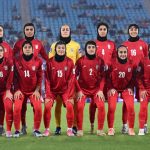
The U.S. President, Donald Trump has weighed in on growing concerns surrounding members of the Iran women’s national football team, who could face severe consequences upon returning home after their early exit from the AFC Women’s Asian Cup in Australia.
The players recently departed their training base in Australia following elimination from the tournament, but fears are mounting that they may face punishment in Iran. The concern stems from the team’s decision not to sing the national anthem before their opening match against South Korea women’s national football team last week.
Iranian state television strongly condemned the gesture, by describing it as “the pinnacle of dishonour” and accusing the players of betrayal. The criticism intensified amid rising tensions in the region following the reported assassination of Iran’s supreme leader, Ali Khamenei, allegedly carried out by the United States and Israel during an escalating military conflict.
Speaking on state television, Iranian television presenter Mohammad Reza Shahbazi warned that acts perceived as betrayal during wartime should be punished more severely. “In times of war, traitors must be dealt with more harshly,” he said, suggesting that individuals who act against the country during such periods could face serious consequences.
The remarks have heightened fears that the players could be investigated for charges such as treason or corruption offences that can carry severe penalties under Iranian law, including lengthy prison terms or even execution. The team did sing the anthem in a subsequent match later in the tournament.
The protest echoes a similar action by the Iran men’s national football team during the 2022 FIFA World Cup in Qatar, when players declined to sing the national anthem in their opening match against England men’s national football team in solidarity with anti-government demonstrations at home.
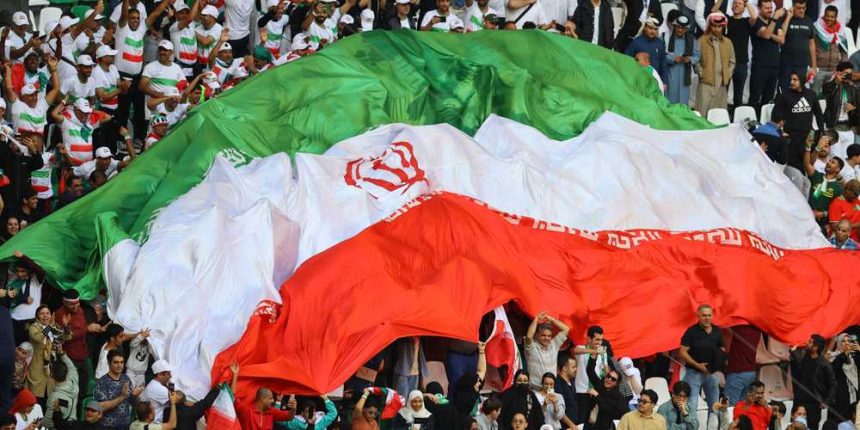
Tensions further escalated after videos circulating on social media showed protesters approaching the women’s team bus while waving the historic Lion and Sun flag, a symbol associated with opposition to Iran’s current government following the Iranian Revolution. Demonstrators could be heard shouting “let them go” as they urged authorities not to force the players to return to Iran.
Public support for the athletes has continued to grow, with more than 46,000 people signing an online petition calling on the Australian government to protect the players from possible reprisals if they are sent back.
In one widely shared clip, at least one player appeared to make an international distress gesture from inside the team bus by tucking her thumb into her palm and folding her fingers over it — a signal commonly used to indicate a call for help.